Helping Children Build the Skills, Confidence and Curiosity to Navigate a Changing Future
What should we help a child learn today when we cannot fully predict the world they will enter tomorrow?
It is a difficult question.
Technology is changing. Artificial intelligence is becoming part of everyday life. The ways people communicate, learn, create and work will continue to evolve.
Some jobs children see around them today may change significantly by the time they become adults. New opportunities will emerge that we cannot yet describe.
So preparing children for the future cannot only mean preparing them for a particular job.
It should also mean helping them develop the ability to learn, question, create, communicate, adapt and solve problems.
That is why the conversation about future-ready skills for children in Kenya matters.
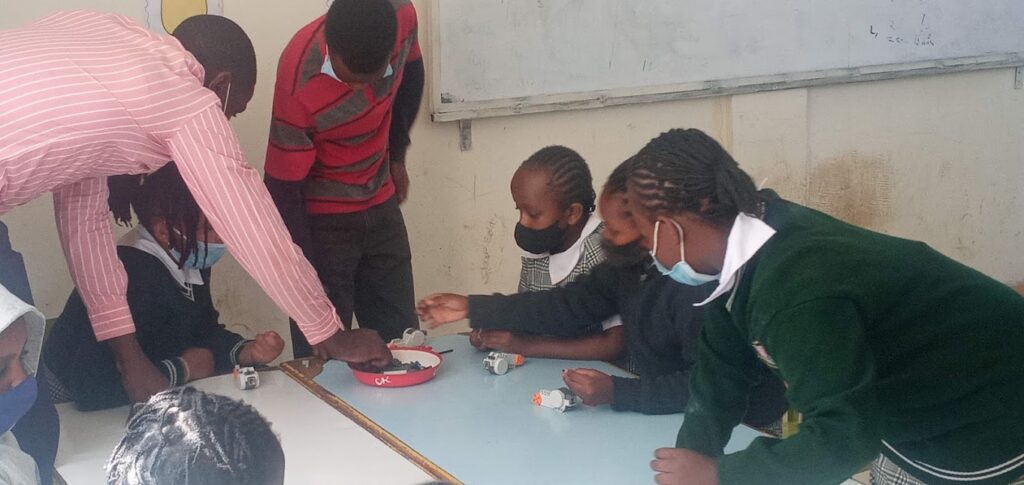
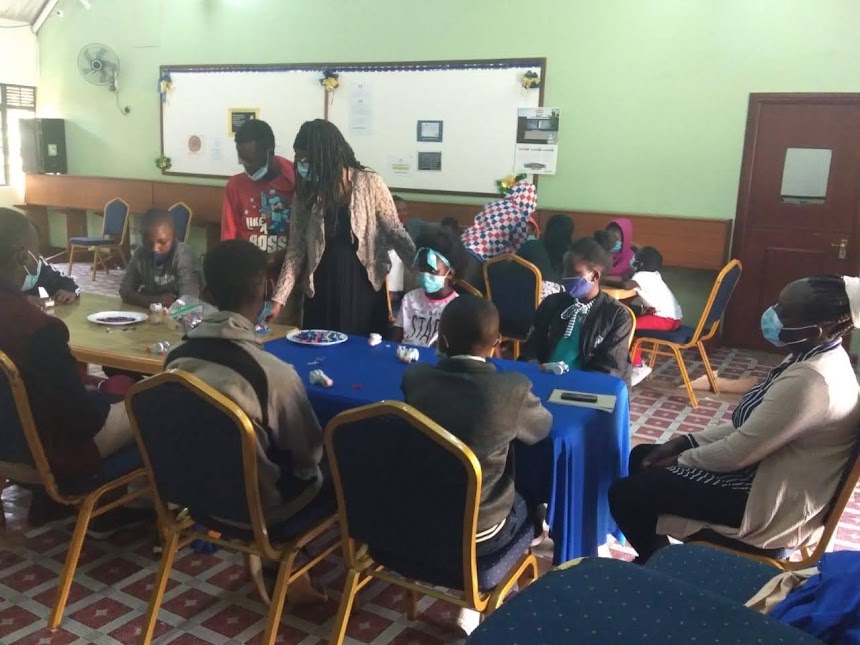
Literacy and academic learning remain fundamental. But children can also benefit from opportunities to explore STEM, digital learning, creativity, leadership, environmental education, sports and responsible awareness of emerging technologies such as artificial intelligence.
There is another important part of the picture.
Children do not develop in isolation.
They grow within families, schools and communities. Their environments can influence whether curiosity is encouraged, whether learning continues beyond formal settings and whether children have opportunities to explore their abilities.
This is the thinking behind MentorSpace’s FutureReady Children & Family Resource Centres:
Where children discover potential — and families grow stronger with them.
Future-Readiness Is Bigger Than Technology
When people hear the phrase “future-ready,” it is easy to think immediately about computers, coding, robotics or artificial intelligence.
Technology matters.
But future-readiness is much broader.
A child who understands technology but struggles to think critically may find it difficult to judge whether information is trustworthy.
A child who has technical knowledge but cannot communicate ideas may struggle to collaborate.
A child who can use digital tools but is afraid to experiment may struggle when faced with unfamiliar problems.
This is why future-ready skills for children in Kenya should combine knowledge with broader human capabilities.
Children can benefit from opportunities to develop curiosity, confidence, creativity, communication, leadership and problem-solving alongside academic and digital learning.
Future-readiness is not about predicting exactly what the future will look like.
It is about strengthening children’s ability to continue learning as that future unfolds.
Literacy Remains a Foundation for Future Learning
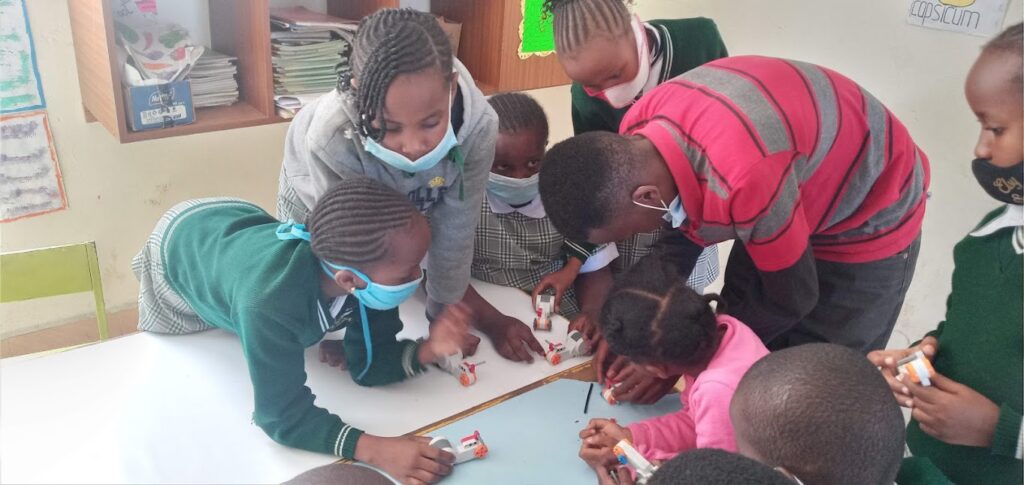
Before discussing AI, digital tools or emerging technologies, one foundational capability deserves attention:
Literacy.
Reading and comprehension support learning across subjects.
A child who can engage confidently with written information has a stronger foundation for exploring science, technology, history, mathematics and many other areas.
Literacy also supports communication and independent learning.
In a digital environment filled with information, the ability to read is only the beginning. Children increasingly need to understand what information means, ask questions about it and distinguish between reliable and unreliable content.
For this reason, literacy remains an important part of developing future-ready skills for children in Kenya.
New technologies do not make foundational learning less important.
They can make it even more important.
STEM Can Encourage Children to Ask Better Questions
Science, Technology, Engineering and Mathematics—often grouped as STEM—can help children understand the world through observation, experimentation and problem-solving.
But STEM should not only be about memorising formulas or learning technical vocabulary.
At its best, STEM encourages questions.
Why does this happen?
What would happen if we changed this?
How could we solve this problem?
Can we build something differently?
What evidence supports this answer?
These habits of inquiry can help children become active learners.
Developing future-ready skills for children in Kenya therefore means creating opportunities where children can explore ideas, experiment and learn through doing.
A child does not need to become a scientist or engineer for STEM learning to be valuable.
The underlying capabilities—curiosity, reasoning and problem-solving—can be useful in many areas of life.
Digital Learning Should Go Beyond Screen Time
Being surrounded by digital devices does not automatically make someone digitally capable.
There is a difference between consuming technology and using technology to learn, create and solve problems.
A child may know how to watch videos or navigate an app without understanding how to research information, create digital content or use technology safely and responsibly.
Digital learning should therefore encourage active participation.
From Digital Consumption to Digital Capability

Children can learn that technology is more than entertainment.
Digital tools can support research.
They can support creativity.
They can help people communicate ideas.
They can enable learning.
They can support problem-solving.
The goal of digital education should not simply be increasing the amount of time children spend using technology.
It should be helping children understand how technology can become a useful tool.
That distinction is important when discussing future-ready skills for children in Kenya.
Children Need AI Awareness, Not AI Dependence
Artificial intelligence is becoming increasingly visible in everyday technology.
Children growing up today are likely to encounter AI-powered systems in education, communication, entertainment and eventually work.
Ignoring AI therefore may not prepare children for the environments they will navigate.
But teaching children about AI should not mean encouraging dependence on it.
AI awareness can begin with simple questions.
What is artificial intelligence?
What can it do?
What can it not do?
Can AI make mistakes?
Should everything generated by AI be trusted?
What information is safe to share with digital tools?
When should we think for ourselves?
These questions can help children develop a healthier relationship with technology.
Critical Thinking Becomes Even More Important
The easier it becomes to generate information, the more important it becomes to evaluate information.
A tool can produce a confident answer that is incorrect.
An image can appear convincing without representing reality accurately.
Information can spread quickly without being reliable.
Children therefore need opportunities to ask:
How do I know this is true?
Critical thinking should be an important part of future-ready skills for children in Kenya, particularly as AI and digital platforms become more influential.
The goal should be children who can use technology thoughtfully—not children who automatically believe whatever technology produces.
Creativity Is a Future-Ready Capability
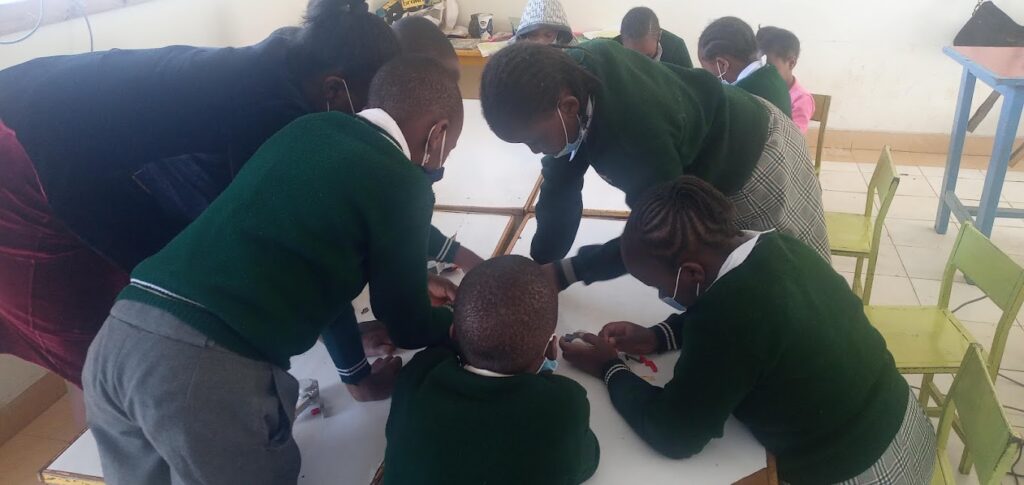
Children naturally imagine.
They draw.
Build.
Invent stories.
Ask unexpected questions.
Experiment.
Turn ordinary objects into games.
That creativity should not be dismissed as something separate from serious learning.
Creativity can help children explore possibilities and approach problems from different directions.
In a changing world, knowing one correct method may not always be enough.
Sometimes people need to imagine a different method.
That is why creativity forms part of MentorSpace’s FutureReady approach.
Developing future-ready skills for children in Kenya should create space for children not only to absorb information but also to make, design, experiment and express ideas.
Problem-Solving Helps Children Navigate Uncertainty
Not every problem a child encounters will have instructions attached.
Life rarely works that way.
Children will encounter unfamiliar situations, changing technologies and decisions where the answer is not immediately obvious.
Problem-solving helps children approach these situations with greater confidence.
It can involve understanding the problem, considering alternatives, testing an idea, learning from failure and trying again.
Importantly, children should learn that getting something wrong does not automatically mean learning has failed.
Sometimes mistakes provide information.
The question becomes:
What did we learn, and what could we try next?
That mindset can support resilience and continued learning.
Leadership Begins Before Adulthood
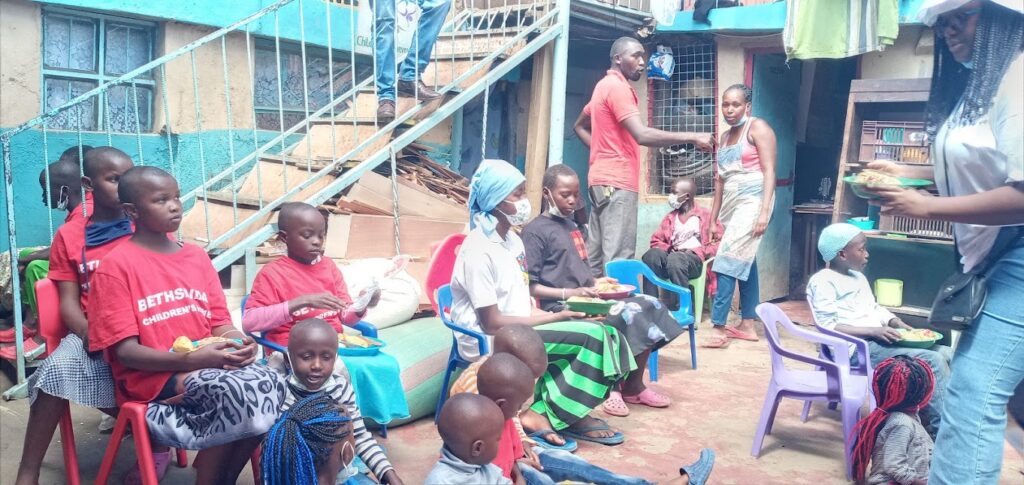
Leadership is often discussed as though it begins when someone receives a job title.
But children can begin developing leadership capabilities much earlier.
They can learn to listen.
They can take responsibility.
They can communicate ideas.
They can work in teams.
They can support peers.
They can participate in decisions appropriate to their age.
Leadership is not about making every child the person in charge.
It is about helping children understand that their choices and contributions matter.
Developing leadership alongside other future-ready skills for children in Kenya can help children see themselves as participants in their families, schools and communities rather than passive observers.
Sports Can Contribute to Healthy Development
Future-readiness should not only happen behind a desk or screen.
Children also need opportunities for movement, play and interaction.
Sports can create spaces where children practise teamwork, discipline, communication and perseverance.
They can learn how to win respectfully and how to respond when things do not go their way.
These experiences can complement academic and digital learning.
MentorSpace therefore includes sports and healthy development within the broader FutureReady programme approach.
A future-ready child is not simply a child who knows how to use technology.
The aim is broader development.
Environmental Education Connects Children With the World Around Them
Children growing up today will inherit environmental challenges as well as technological opportunities.
Understanding the environment can help children recognise relationships between everyday choices, natural resources and community wellbeing.
Environmental education can encourage observation, responsibility and problem-solving.
It can help children ask questions about waste, water, land, trees, biodiversity and climate.
Developing future-ready skills for children in Kenya should therefore include opportunities to understand both the digital world and the natural world.
Future-readiness is not only about participating in tomorrow’s economy.
It is also about participating responsibly in tomorrow’s communities.
Families Are Part of the Learning Environment
A child does not stop developing when a lesson ends.
Learning continues at home and through interactions with family and community.
This is why FutureReady is not designed only around children.
It also recognises family learning and parenting support.
Families do not need to know every new technology to contribute meaningfully to children’s development.
They can ask questions.
Encourage reading.
Listen to children’s ideas.
Create space for creativity.
Discuss responsible technology use.
Encourage curiosity.
Celebrate effort as well as achievement.
This family dimension distinguishes MentorSpace’s approach to future-ready skills for children in Kenya.
The child remains at the centre, but the environment around the child matters too.
FutureReady Children & Family Resource Centres
MentorSpace’s FutureReady programme brings these ideas together through a broad approach to children’s and families’ development.
The programme is designed around:
Mentorship. Literacy. STEM. Digital learning. AI awareness. Creativity. Problem-solving. Leadership. Sports. Healthy development. Environmental education. Family learning. Parenting support. Community engagement. Future-ready skills.
The purpose is not to predict exactly what every child will become.
Children should have space to discover that themselves.
Instead, FutureReady aims to help create supportive environments where children can explore their capabilities, build confidence and prepare to continue learning in a changing world.
Its core message is:
Where children discover potential — and families grow stronger with them.
Mentorship Can Help Children Discover Possibility
Sometimes a child needs information.
Sometimes they need encouragement.
Sometimes they need someone who listens.
Mentorship can create supportive relationships through which children explore ideas, ask questions and build confidence.
A mentor should not decide a child’s future.
The role is to help create space for discovery.
This fits MentorSpace’s wider philosophy: people are the protagonists of their own development.
MentorSpace aims to help build pathways.
Measuring More Than Attendance
If children attend a learning activity, attendance tells us something important.
But it does not tell us everything.
Did children develop knowledge?
Did confidence improve?
Were they able to demonstrate new capabilities?
Did they become more curious about a subject?
Did families engage with learning?
These are different questions.
MentorSpace’s impact philosophy is:
Measure transformation, not just participation.
As the organisation strengthens its Monitoring, Evaluation & Learning systems, it aims to distinguish outputs from outcomes and use participant feedback, evidence and learning to improve programme design.
This matters when working on future-ready skills for children in Kenya because children and families deserve programmes that are interested not simply in completing activities but in understanding whether those activities contribute to meaningful development.
Conclusion: Preparing Children to Keep Learning
We cannot hand children a map of the future.
The world they inherit will contain opportunities and challenges we cannot fully predict.
But uncertainty does not mean we can do nothing.
We can strengthen foundations.
We can encourage literacy.
We can create opportunities to explore STEM.
We can help children understand technology and AI without becoming dependent on them.
We can encourage creativity.
We can strengthen problem-solving.
We can create opportunities for leadership, sport and environmental learning.
And we can recognise families as part of the learning environment.
Developing future-ready skills for children in Kenya is not about turning every child into a programmer, scientist or entrepreneur.
It is about helping children develop the capabilities and confidence to discover their own possibilities.
Children already have curiosity, imagination and potential.
Our responsibility is not to decide their future for them.
It is to help create environments where they can learn, explore, question and grow.
Explore FutureReady Children & Family Resource Centres:
https://mentorspacekenya.org/futureready-children-family-resource-centres/
Frequently Asked Questions
1. What are future-ready skills for children in Kenya?
Future-ready skills are capabilities that can help children continue learning and navigating change. They can include literacy, digital awareness, STEM learning, creativity, problem-solving, critical thinking, communication and leadership.
2. Why are future-ready skills important for children?
Children are growing up in a world shaped by changing technology, environmental challenges and evolving ways of learning and working. Broad capabilities can help them adapt, learn and participate as circumstances change.
3. Are future-ready skills only about technology?
No. Digital capability is one component. Future-readiness can also include literacy, creativity, critical thinking, communication, leadership, problem-solving, environmental awareness and healthy development.
4. Why is STEM important for future-ready skills for children in Kenya?
STEM can encourage curiosity, experimentation, reasoning and problem-solving. These capabilities can be valuable even for children who eventually pursue careers outside science, technology, engineering or mathematics.
5. Should children learn about artificial intelligence?
Age-appropriate AI awareness can help children understand technologies they are increasingly likely to encounter. Learning should include AI’s capabilities, limitations, responsible use and the importance of critical thinking.
6. What is the difference between digital literacy and using a smartphone?
Using a device does not automatically demonstrate digital literacy. Digital capability can also involve finding and evaluating information, creating content, communicating appropriately, solving problems and using technology responsibly.
7. Why is creativity important for children’s future?
Creativity helps children imagine possibilities, express ideas and approach problems in different ways. These capabilities can complement academic, digital and technical learning.
8. What role do families play in developing future-ready children?
Families can support learning through reading, conversations, encouragement, responsible technology habits and opportunities for children to ask questions and explore interests. This is why FutureReady includes family learning and parenting support.
9. What are FutureReady Children & Family Resource Centres?
FutureReady is MentorSpace’s programme designed around children’s mentorship, literacy, STEM, digital learning, AI awareness, creativity, problem-solving, leadership, sports, environmental education and family learning.
10. How can organisations support future-ready skills for children in Kenya through MentorSpace?
Organisations, educational institutions, businesses, professionals and technical experts interested in children’s learning and family development can explore opportunities to collaborate with MentorSpace.
Explore FutureReady:
https://mentorspacekenya.org/futureready-children-family-resource-centres/